Monday, June 28, 2010

Space Is Still Available, But Filling Up Fast!


The July 4th holiday has left plenty of room at Anokijig next week, but that's certainly not the case in the weeks following. Weeks Five and Six at Anokijig are already sold out and Weeks Seven and Eight only has a few spots remaining.

Our Stamper program is also at or close to capacity for the rest of the summer, so if you are interested in participating, call Camp today! Our Fishing Expedition programs are always popular and this year is no exception. Fishing Expeditions II in Week 5 is very close to capacity, but there is still plenty of space in that program during Week 8.

Our Mini Camp program is at capacity for Week 8, but there is still space available in other weeks. Ranch Camp only has a few spots remaining in Weeks 5 & 6, so if your child would like to learn more about horses, don't wait too long to sign up.

Our day trips to Noah's Ark in the Wisconsin Dells have been so popular, we've made them available in Weeks 5-9, but Week 5 is already full. This is a very popular day trip, so if your son or daughter would like to sign up, now is the time. Our Paint Ball day trip is offered every week this summer, but it is filling up fast in Weeks 5-8. There is still space available in each of those weeks, but don't wait too long to sign up!

For up to the minute details on available programs and activities, you can call the Camp office at 1-800-741-6931.

Tuesday, June 15, 2010

A Luxury For Some, a Necessity for Anokijig

Like many non-profits, Anokijig has a long list of things we need to help provide a wonderful experience for our campers (not the least of which is a generous donor, who would like to help pay off our bank loans).  When we first saw these golf carts a few years ago, we thought the big tires were just for showing off and didn't think they actually served a purpose.  As we've acquired a few golf carts over the years at Camp, we've come to realize they do have a functional purpose, at least at Anokijig.  This particular cart is an ST Express, manufactured by EZ-GO, but other manufacturers make similar versions.

Anyone who has ever visited Anokijig can tell you our terrain can be very hilly and some of our roads can be quite rocky.  The golf carts we have now do an admirable job of handling that terrain, but many times they are just not up to the task.  Our golf carts have tires that were designed not to tear up well-manicured grass, not scramble over a rocky hillside on the way to a tent section.  Bottoming out on rocks and flat tires at Anokijig are not uncommon.

Our golf carts are also limited in their seating capacity at four, while this cart has three rows of seating.  This is especially important when families are at Anokijig.  We frequently shuttle families to and from sections on check-in day and we're often limited in what we can carry.  Sometimes there's only enough room for mom, dad and some luggage.  There is also a big need on family weekends, when larger families need help moving around camp or from remote parking during our special events.

We don't expect someone will read this blog today and we'll have a new golf cart at our doorstep tomorrow, but we at least want to put the information out there, so folks know there is a need.  Someone may know a person who has one of these carts, but rarely uses it and might be interested in making a tax-deductible donation.  We suspect this cart might be similar to the RTV that was donated by Ken and Melody Cavan a few years ago.  We never had an RTV before, so we didn't recognize the specific need for it.  Now that we have one, we don't know how we ever survived without it.

If you know someone who has one of these carts or a dealer or manufacturer, please tell them about Anokijig and help us better serve the children and families who visit us!

Saturday, June 5, 2010

Leadership Training- Free of Charge!


Did you know Camp Anokijig offers a comprehensive leadership training program free of charge? It's true and it's one of our most valuable, but least-talked about program areas. Many camps charge a fee for this training, but we have always believed this life skill is too important to restrict only to those who can afford it.

Many of the staff members who go through our program move on to careers in fields involving education and mentoring youth and Anokijig's leadership program and the experiences they have here are often the catalyst for that career path. We once lived in a world (and country), where military service was required of our young people. While we are thankful for the sacrifices made by previous generations, we still acknowledge that the leadership skills and training those generations learned through military service to our country are still needed today. That's not to say we put our participants through boot camp, but they do learn many valuable lessons and skills that many of today's young people simply are not exposed to at all.

Our senior staff is already at Camp and we're just wrapping up our lifeguard training. We can't thank our wonderful donors and supporters enough for making these programs available to all who are interested. If you'd like to learn more about our leadership training and staff opportunties, please visit this link- http://www.anokijig.com/staff_benefits.htm

Tuesday, May 25, 2010

Summer Registration Is In Full-Swing


There is less than a month to go before the start of Camp Anokijig's 2010 summer camping season and we are already seeing registrations ahead of last year's pace in some of our weeks. There is still room available in all of our weeks, however, some programs are already reaching capacity.

Our Stamper program had already filled up for Week 3. Weeks 4-7 and 9 are also filling up quickly, so if your child is interested in our Stamper program, don't delay in signing up!

The following programs are also nearing capacity, so be sure to register soon, to ensure your first choice-

  • Week 4 Whitewater Adventure Trip
  • Week 4 Competitive Swim Camp
  • Week 5 Fishing Expedition II
  • Week 5 Noah's Ark Trip
  • Week 6 Paintball

Friday, May 21, 2010

Join Us For Taste of the Outdoors!


The leaves are all on the trees, the rain has stopped falling and final preparations are being made for Camp Anokijig's Taste of the Outdoors weekend. Our doors will swing wide open at 9:30 AM on May 22nd & 23rd for an all-you-can eat lumberjack breakfast.

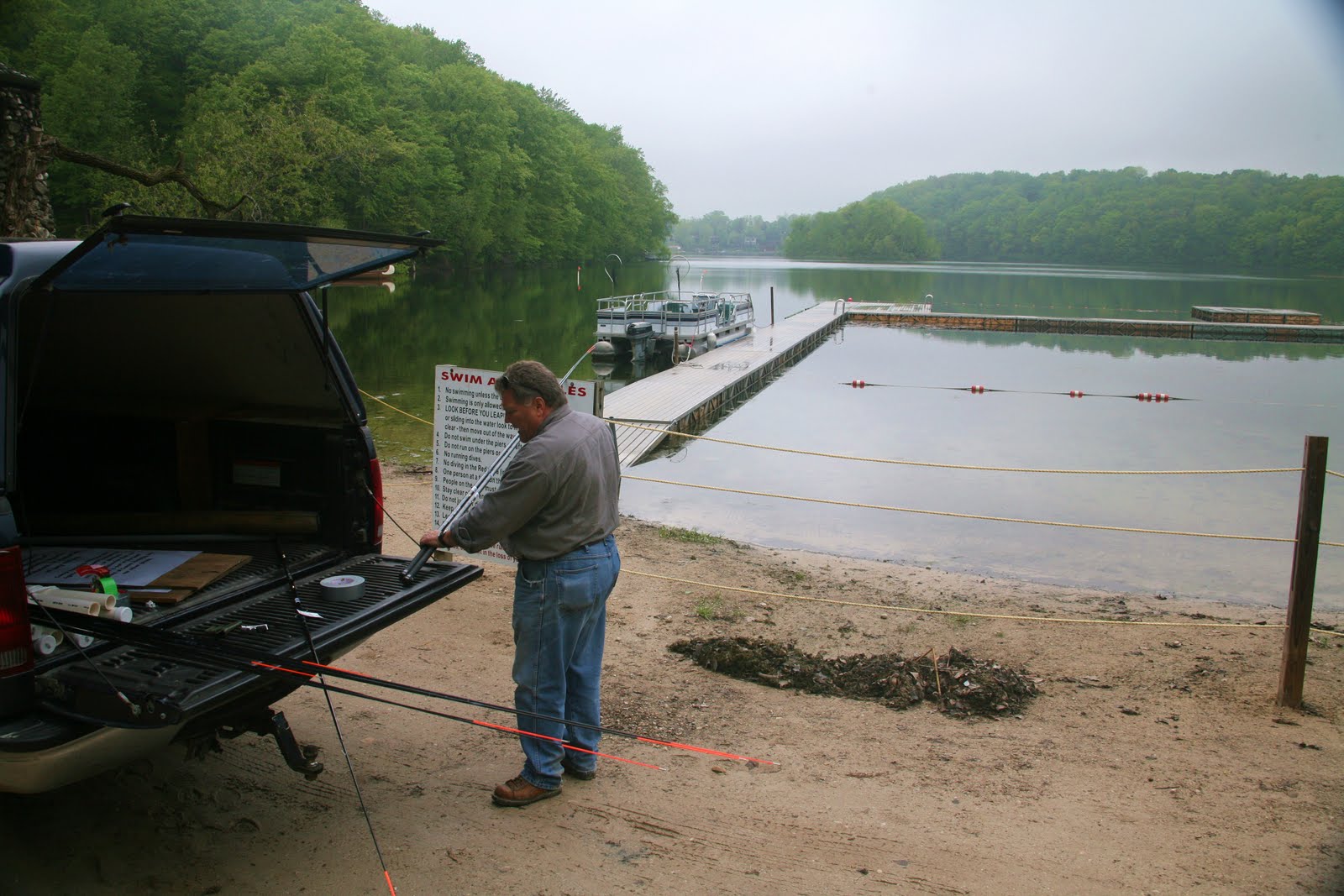
We'll also be offering lumberjack games, including a tomahawk throw, cross-cut saw contest and frying pan toss. We'll also have many of our familiar program areas open, including archery, the waterfront area, including all kinds of boats, canoes and kayaks. We'll also be offering majestic boat rides around Little Elkhart Lake and races in our massive Voyageur canoes. Our nature center will also be open, along with face-painting, and thanks to the hard work of our Camp Director, Jim Scherer, we'll also be offering cane pole fishing for any aspiring anglers.

Admission is just $9 for kids 12 and over, 4-11 are $5 and anyone under four gets in free! Best of all, the proceeds from this event will go to benefit the Anokijig Scholarship Fund, which helps send deserving kids to Anokijig. We hope you'll join us for this wonderful weekend. We've looked at the forecast and it's going to be a great weekend to be at Anokijig!

Wednesday, May 19, 2010

So Your Daughter Wants a Horse?


Is your daughter so interested in horses, that she would like you to buy one for her? You're not alone. We always want to provide wonderful learning opportunities for our children, but from an ownership perspective, how much does it cost to own a horse?

We can start with the purchase price. Although some horses can cost tens of thousands of dollars, for a first-time rider/owner, a good horse can probably be found for well under $1,000. Let's conservatively say you can find one for $600.

The next expense will come in stabling fees. If you happen to live on a 10-acre parcel of land, you might be able to save a significant amount of money on boarding, by keeping the horse on your property (if your community zoning laws allow it). If not, monthly boarding fees can run anywhere from $200-500 per month. Let's again suppose you can find a very affordable place to keep your horse, which is also a short drive from your home and it only costs $200/month. With the cost of the horse, that puts us at $3,000.

As it turns out, the board was so cheap, because it didn't include feed. An average horse can eat about 20 lbs. of hay per day (1/2 bale). That can also vary, based on how much a horse grazes, but if we calculate 183 bales of hay at about $2.50/bale, that adds a approximately $450 more in just the first year, bringing our grand total up to $3,450. Most horses should also get some grain, so we can conservatively add another $150 a year, bringing our total so far to $3,600.

Some boarding fees include bedding, which can run about $200/year, so we'll again be conservative and assume that's included in the $200/month boarding fee. We'll also assume that bargain of a boarding fee includes mucking of the stalls (stall cleaning), so we wont tack any additional expense onto that.

Your horse will need to get shots twice a year, so do plan on paying a veterinarian about $300 per year, bringing our total up to $3,900 per year. You'll also need to pay a farrier to keep your horses' hooves properly-trimmed. That can sometimes get expensive, if an animal needs shoes (just like kids, huh?), but we'll assume it's healthy in that regard and you'll only spend another $100 a year, bringing your total up to $4,000. You're almost ready to go. All you need now is another $500 for tack, which includes a helmet, saddle, blanket, bridle and other riding equipment. If your daughter has little or no experience on a horse, you'll probably want to make sure she gets good instruction, so add another $1,000 per year onto our total and when it's all added up our the first year of horse ownership will run you at least $5,500.

This assumes you don't want mortality insurance on your horse and your daughter doesn't have expensive tastes in horses, stables, clothes or riding lessons. The good news is, that initial $5,500 investment drops by at least $1,000 in year two, because you won't need to buy a new horse and tack every year (at least in theory). In subsequent years, spending $4,000 per year on a horse can be done, provided the horse stays healthy and you don't end up buying a horse trailer, so your daughter can go riding in other places. Some horses can live for 20 years or more, so assuming your daughter will never let you sell "Blacky" or whatever your horses' name is, this purchase could approach nearly $100,000 over the life of the horse.

Why do we lay all this information out for you? Because Camp Anokijig offers a reasonable alternative to buying a horse- use one of ours! We have more than 50 horses at Anokijig, many of them formerly owned by parents just like you. We also have dozens of miles of riding trails, all the tack, hay, safety equipment and proper riding instruction that any youngster needs. All this can be had for just $580 per week and that includes food, lodging and all the other fun activities at Anokijig! If you would like more information on our Ranch program, follow this link.

$5,500 vs. $580 The math makes the choice look simple, but we know kids always do their best to complicate things. Even if your daughter insists on her own horse, why not encourage her to spend some time learning her way around them at Anokijig, before buying one of her own? She might fall in love with one of our horses and decide she doesn't want one of her own or she could just decide horses weren't her cup of tea. Either outcome could end up saving you thousands of dollars and countless headaches.

Thursday, May 13, 2010

Getting Tee'd Off For Kids

Do you like to golf? Do you want to help Anokijig? Have we got a deal for you!! Camp Anokijig has been chosen by the Sheboygan Jaycees as a beneficiary of their annual golf tournament!

We need to enter at least one foursome in the tournament, but wouldn’t it be great to have tons of Anokijig supporters enjoying a day on the links together? Besides a fun, four-person scramble format, you will have a chance to win bunches of fantastic hole and raffle prizes, even a BRAND NEW CAR!

Entry fee includes greens fees, golf cart, lunch, 2010 Golf Days souvenir and a golfer goodie bag. For more information, visit the Jaycees site- http://www.sheboyganjaycees.com/index.php?section=15

Can anyone say FORE!!?!!? Or make that four– rustle up four of your friends to join us on June 11th at the Town and Country Golf Course- W1945 County J in Sheboygan.

Please note, entries must be postmarked by May 22nd. Since June 11th is a Friday and some of you live a distance away, lodging will be available at Camp Thursday and Friday night. Please contact Darin at darinh@excel.net to make arrangements.

If you are not a golfer, but would still like to help Anokijig, we are in need of volunteers to help on the course on the day of the event. Please contact Mary Krahn at marykrahn@excel.net to sign up. We look forward to seeing you on the links!

Tuesday, May 11, 2010

Vote For Susan Bemis to Help Send Kids to Anokijig!

A Vote for Susan Bemis is a vote for the kids of Camp Anokijig. Come join us, it will make you feel good!

If you like Dancing with the Stars and think we need to do more for less fortunate kids, you will love the Movers and Shaker Gala to benefit local charities, which includes sending kids to Camp Anokijig.

Susan Bemis of Bemis Manufacturing will dance the night away at the Movers and Shakers Gala at Lakeland College on May 22nd. All the participants are donating their time and talent to raise funds for non-profit organizations and Susan has generously chosen Camp Anokijig to be her selected benefactor.

Susan is one of a group of area “celebrities” showing off their best dance moves as a part of the Movers and Shakers Gala at Lakeland College. On Saturday, May 22, the Todd Wehr Center at Lakeland will be transformed into an elegant ballroom, complete with beautiful decorations and huge video screens to provide the who’s who with a lush stage to showcase their best moves.

The celebrities have been paired with a professional dancer and are in the midst of training, before they compete to win the support of three professional judges, one guest judge, plus votes from friends and fans.

Your vote counts! You don’t have to attend the event to help support Camp Anokijig. Votes are $20 each and for every vote that Susan receives, dollars will be presented to the Camp Anokijig Scholarship Fund for less fortunate children. Anyone can purchase votes prior to the event at http://www.moversandshakersgala.org/ The deadline for voting is 9:00 p.m. on May 22nd so please vote early and often!

Thanks for being a part of all that Anokijig does for kids.

Jim Scherer
Executive Director, Camp Anokijig

P.S. Why not forward this message to all your friends and ask them to support our efforts to send less fortunate kids to Camp Anokijig? It will make them feel good too!

Thursday, April 29, 2010

Camp Anokijig- Blissfully Old-Fashioned

This is a picture of one of Anokijig's tent sections from the 1950s.  Stroll into a tent section at Anokijig today and things won't look all that different.  During rest hour, campers who aren't napping will quietly swap stories, read books or play games, just like some of their parents and grandparents did when they were campers.  Much at Anokijig has changed over the years, but many things have stayed the same.

We like to talk about the fact that anything you can do at Anokijig, you probably can't do at home and anything you can do at home, you probably can't do at Anokijig.  As we hear news reports of Boy Scouts earning awards for video game proficiency and schools teaching texting abbreviations as part of their spelling curriculum, we're glad Anokijig hasn't changed too much.  Anokijig is a video game-free and text-free zone.  For many of our campers, the last week they spend at Anokijig may be the last week they ever spend "disconnected" from the modern technology that surrrounds and permeates every facet of our lives.

Our campers communicate with each other through words and actions, not e-mails, texts and tweets.  Their parents mail them letters, that they will read over and over again and some of the kids will even send a letter or postcard home.  For many of our campers, Anokijig is an oasis of simplicity in a very complex world and that's just the way we like it.

Friday, April 23, 2010

How To Pick The Right Summer Camp For Your Kid

Barbara Rowley recently wrote an article for Parenting Magazine on how to pick the right summer camp for your child.  As a former camper and staff member herself, Rowley knows the ins and outs of sleepaway summer camps fairly well and her insight can be very valuable to families considering a sleepaway camp for their child.

Some of her key points for selecting the best camp for your child include the following-

A History
While Rowley knows there are some great new camps out there, she knows some experts and families believe that camps that have been operating for decades, especially with the same staff, has significant meaning.  Camp Anokijig has been in operating since 1926 and our core group of staff members- Jim Scherer, Darin Holden, Don Hill & Scott Stewart all grew up as campers at Anokijig and have more than 100 combined years of adult working experience at Anokijig.  Rowley states that in today's world, a camp simply couldn't stay in business for generations if it were unsafe or suffered from poor leadership and management.

A Philosophy
Rowley thinks it's important to know the philosophy of a camp before sending your child there and she's absolutely correct!  If you are looking for a camp that focuses on sports, there are hundreds to choose from, but Anokijig isn't one of them.  The week many children spend at Anokijig will be the most active week of their year, but it won't be spent on our soccer field or baseball diamond, because we don't have either.  We do play earthball and no one plays scatterball like we do, but they aren't the focal point of our activities.  We like to tell folks anything your child can do at Anokijig, they probably can't do at home and anything they can do at home, they probably can't do at Anokijig. 

An Emphasis on Creating a Community
Rowley believes good camps think about how they place kids together to create the most inclusive experience for all.  Anokijig has more than a dozen different tent sections and cabins, which allows us plenty of flexibility for assigning bunk space for campers.  Three years may not seem like a long time to adults, but we know it is an eternity for kids.  The social experience of camping is important and we know the differences between nine year old campers and 12 year old campers, because we see them every year.  While there are plenty of opportunities for all campers to interact, we do our very best to make sure kids are comfortable with the bunkmates in their sections and part of that is grouping kids appropriately by age.  Our size still allows us the flexibility to accomodate many requests for bunkmates.

A Well-Trained Staff
Rowley feels it is important for camps to be adequately-staffed and we couldn't agree more.  She suggests low ratios of 10 to 1 for kids ages 8 to 14.  Even during Anokijig's busiest weeks, our capacity is about 315 campers.  If we were at Rowley's low ratio, we'd only have about 32 staff members to monitor all those children.  Our actual ratio is far better than Rowley's, as our cooks feed more than 400 people during our busy weeks.  Rowley also feels it's important for staff to be background-checked and have plenty of references as well.  As an ACA-accredited camp, we follow all of those procedures for staffing and have known many of our current staff members, since they were campers at Anokijig.  We also run two weeks of staff training before the first summer camper even arrives at Anokijig.

An Element of Choice
One of the great things about a summer camp experience, is that a child is free from their daily, pre-set schedules.  When they arrive at Anokijig, we evaluate their swimming ability and then ask them to select two skills, from a wide variety of program areas.  Examples could include archery, arts & crafts, woodworking, fishing, trail crafts, and sailing.  Anokijig campers will devote time each day to their two choices, but we also leave plenty of unstructured free time, allowing campers the opportunity to try out other program areas as well.  Rowley believes this structure (or lack thereof) will help your child to feel more independent, especially if they are making the choices for which activities they participate in.

A Communications Plan
Rowley believes a consistent policy on camper phone use is important, as well as making sure there are procedures in place for contacting parents about upcoming events or if their child becomes sick or injured.  Safety comes first at Anokijig and a good portion of our camper orientation focuses on safety and emergency procedures.  Although cell phones are not allowed at Anokijig (and most don't work anyway), we always have staff on duty at all hours of the day and always have the ability to contact parents whenever needed.  We do encourage our parents and campers to write letters to each other throughout the week, but we know that frequent phone conversations can actually make it harder for both parents and children to be away from each other.

A High Standard of Accreditation
Rowley encourages parents to ask camps if they are accredited by the American Camp Association (ACA), which conducts on-site visits and reviews programs, facilities, and hiring and safety policies.  Rowley claims only the most professionally run camps qualify and we're proud to tell parents we scored a perfect 100 on our most recent ACA inspection.

Choosing the right camp can be a challenge for parents, but the experiences their children will have can last a lifetime and are well worth the effort.  If you'd like to read Rowley's entire article, you can find it here- http://is.gd/bER5o

Sunday, April 18, 2010

A Brief History of Camp Anokijig

We've noticed a spike in traffic lately to the Anokijig Insider. We're not sure why that has happened, but we're glad you're here. It did occur to us that you might not know anything about who we are or what we do, as many of our blogs are written with the idea that most of our audience is already familiar with Camp Anokijig. With that in mind, we'd like to use this blog to give a brief history of Anokijig.

In the mid-1920s, the Racine YMCA decided they wanted a summer camp for the boys in Racine and they gave two men the task of finding a suitable location, within a reasonable drive of Racine, Wisconsin. The ideal location would be a large parcel of land, located on a body of water that had not been over-run with development. Wisconsin was a popular weekend destination for the Chicagoland area in the 1920s, so this was no easy task.

The two men searched the 1920s version of Google (the real estate listings in local papers) and set out to find the perfect spot for a camp. As they continued to fan out from Racine, they stopped for lunch one day about 70 miles north of Racine, in a town called Plymouth. They were having trouble locating a lake and shared their story with the locals at the restaurant. Upon hearing their story, it was recommended that they take a look at Little Elkhart Lake, a body of water so hidden, many locals didn't even know how to find it, they just knew it was somewhere north of town.

The two men parked their vehicle and hiked through more than a half mile of Kettle Moraine forestland, before emerging on a shoreline and taking their first glimpse of Little Elkhart Lake. A local farmer was building a small cabin on the shoreline, but no other buildings were visible from their position and the water sparkled crystal-clear, with trees surrounding the shoreline and the only sounds coming from the birds in the area and the wind blowing through the trees.

The two men struck a deal with the farmer to lease both the cabin and 40 acres along the shoreline for $50 per year and Camp Anokijig was born. The idea of camping took hold in Racine and the first 40 acres was soon purchased and Anokijig's home was made permanent. In the subsequent years, more land was added and Anokijig's total acreage now approaches 400, including 3/4 of the water frontage on Little Elkhart Lake.

Camp Anokijig hasn't just grown in size. Our summer camp program now operates in nine one-week sessions and we welcome more than 2,000 summer campers (boys & girls) every year from more than 20 different states and seven foreign countries.

Why is Camp Anokijig still appealing after more than 80 years? Because kids are still kids and as much as the rest of the world has changed, much of Anokijig still remains the same. We've added quite a few cabins over the years, but many of our campers still sleep in platform tents. Our ranch program now has more than 50 horses, but it's still all located on our property and ranch campers still earn scarves in our Ranch Program.

We don't have any ipods, computers or cable TV for campers to use, but they can still shoot arrows, paddle a canoe or learn how to catch a fish. In short, anything a kid can do at home, they probably can't do at Anokijig and anything they do while they're at Anokijig, they probably can't do at home. Amazingly enough, even in the digital era we live in now, there's something very appealing about that to kids.

Getting back to the Anokijig story, Anokijig was struggling in the late-1970s and early-1980s. The Racine YMCA was even considering selling the camp at that time, but a former camper and staff member, Jim Scherer, stepped forward and offered to try and turn things around. No previous Camp Director had ever lived at Anokijig year-round, but Scherer felt that being here all the time was the only way to make the camp successful. Scherer was soon joined by other former campers and part-time staffers, Darin Holden, Scott Stewart, and Don Hill. Together they turned Anokijig around in a relatively-short amount of time and soon had it operating in the black.

The Racine YMCA continued to own Camp Anokijig until 2005. At that point, Anokijig had been operationally-profitable for more than 20 years, but the Racine YMCA found themselves in between a rock and a hard place and decided Anokijig had to be sold. Once again, Scherer and his staff rallied camp supporters and a grass roots effort was formed to save Anokijig from development.

A non-profit corporation was formed, financing was secured and the Friends of Camp Anokijig placed a successful bid to purchase Anokijig from the Racine YMCA. 2010 marks the fifth season of operation as an independent, non-profit youth and family camp, but the camping experience is very much the same as it has been for the last eight decades. Anokijig offers a wonderful environment, with a staff dedicated to maximizing the camping experience for all of our visitors.

There are plenty of great stories about Anokijig on this blog, but we'd encourage you to visit Anokijig in person, as there really is no substitute for the real thing. Thanks for stopping by and catching a bit of the Anokijig spirit!

Jim McIlvaine
Vice President, Camp Anokijig